FOR GROWERS in Western Australia, managing soil acidity is a delicate balancing act.
A good maintenance liming strategy should consider soil type and soil pH to depth so that acidity can be managed effectively.
The amount of alkalinity removal from soil depends on crop type and yield, while acidity can increase through fertiliser application – even more so when nitrate is leached from the root-zone.
The extent of nitrate leaching depends on soil texture and rainfall, with leaching in the medium to high rainfall environment estimated at 65 per cent for sandy soils and 25 per cent for loamy soils.
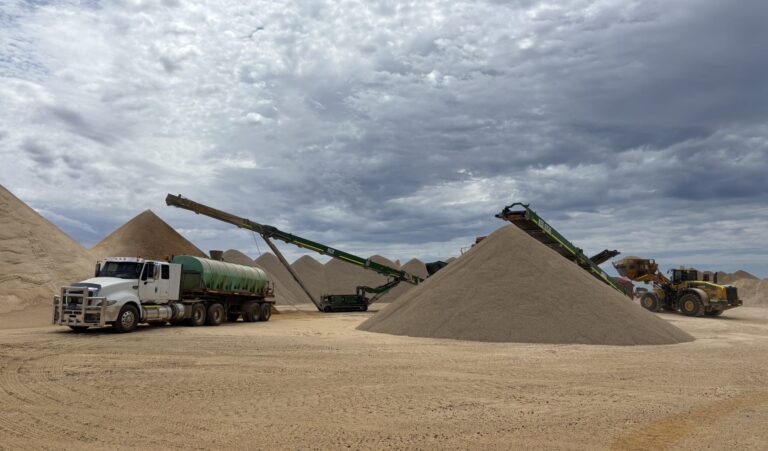
Agricultural lime, a long-standing source of alkalinity, is used to restore or at least balance the alkalinity lost from soil, but the question is how much should be applied?
To fine tune recommendations, DPIRD modelled a five-year lime requirement for cereal crops receiving 60 kg, 120 kg and 180 kg of nitrogen fertiliser in a medium to high rainfall environment (325-450 mm), including both sand and loam soils in the study.
The modelling showed that the five-year lime requirement for a cereal crop receiving 120 kg application of nitrogen (applied annually) was 1.9 t/ha for a sandy soil compared to 0.8 t/ha for a loam soil, when using lime with a 90 per cent neutralising value.
The DPIRD research also indicated that while more growers were adopting liming practices, total lime tonnage used had decreased. This signals a shift from recovery liming to maintenance liming across the Wheatbelt, as lower application rates of lime are needed to maintain topsoil and subsoil pH compared with the higher rates needed to address severe soil acidity.
DPIRD Principal Research Scientist Dr Gaus Azam said growers were getting more strategic with their use of lime.
“A lot of the high-rainfall farmers who are within 150 kilometres of the coast have applied 8 to 10 t/ha of lime to their soil over the last 15 to 20 years,” he said. “They already use deep ripping and spading to 30 or 35 cm.
“Their topsoil pH is OK. They’re almost there so they don’t need big rates of lime – maybe just 1 t/ha every few years.
“Once you manage subsoil acidity, the ongoing efficiency of lime is much better.”