A NEW project led by Murdoch University (MU) will improve grain growers’ understanding of the impact of soil pH on micronutrient availability and crop nutrition, helping them make better fertiliser management decisions.
The Grains Research and Development Corporation (GRDC) investment follows feedback raised by farmers at National Grower Network (NGN) forums at Grass Patch, Latham and Gnowangerup.
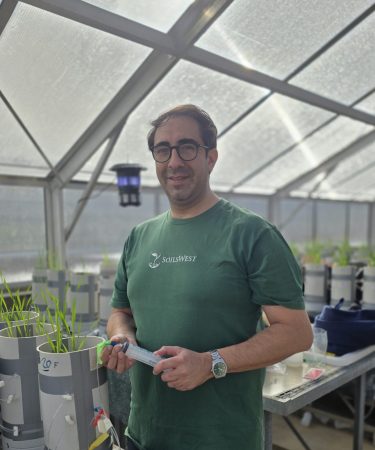
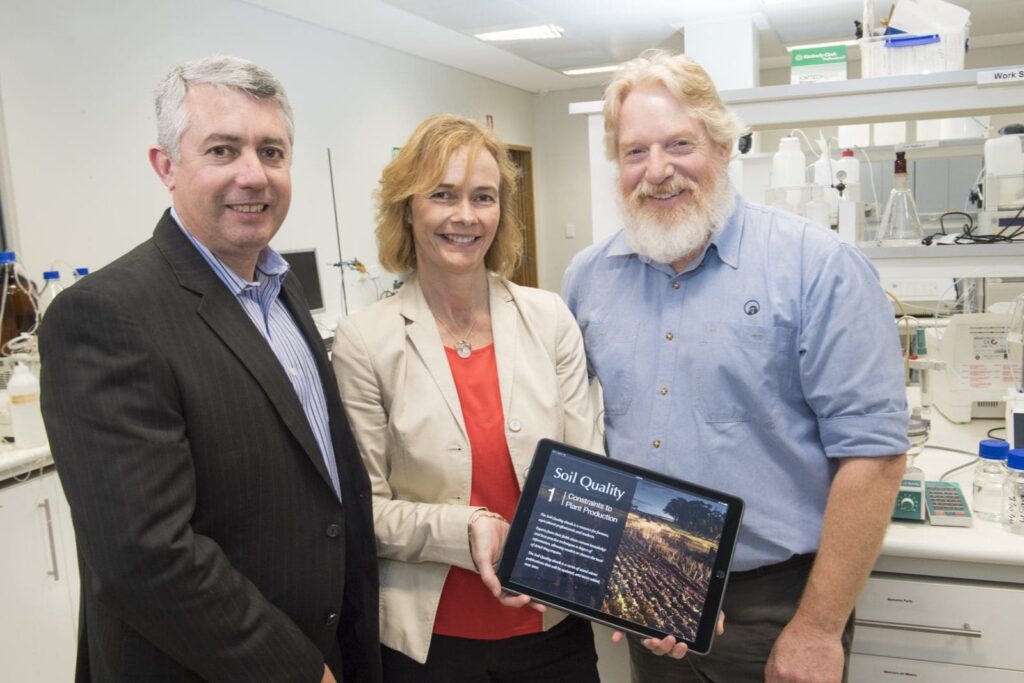
MU Research Scientist Dr Tona Sanchez-Palacios will work alongside Emeritus Professor Richard Bell and Professor Daniel Murphy to update WA’s micronutrient guidelines – the recommendations for how farmers can manage levels of copper, zinc and manganese in wheat and canola production, particularly under changing soil pH conditions.
The project has started with Dr Sanchez-Palacios’ literature review of existing research and will transition to glasshouse studies (2027) and field validation involving the Liebe Group (2028). Dr Sanchez-Palacios will then present the research findings and implications for micronutrient management at the GRDC Grains Research Updates in 2029.
“We want to understand how soil pH influences the availability of copper, zinc and manganese, and how these changes affect nutrient uptake, crop growth and grain yield. This will help us assess whether existing micronutrient recommendations remain appropriate for modern wheat and canola production systems,” he said.
“Our research will investigate how micronutrient availability changes across a range of soil pH conditions, considering differences in soil properties and the implications of liming practices. We aim to identify when these changes may affect crop nutrition and whether growers need to reconsider their micronutrient management strategies.”
The lime impact is firmly on Dr Sanchez-Palacios’ radar.
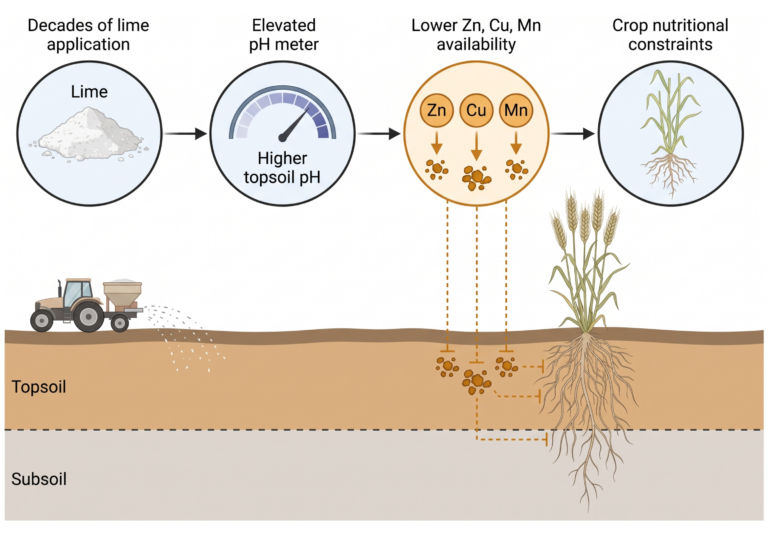
Managing soil acidity through liming is an important practice in WA grain production, however increasing soil pH can also alter the availability of essential micronutrients, potentially affecting crop nutrition. Understanding these interactions is particularly relevant as growers continue investing in liming and soil amelioration practices.
Dr Sanchez-Palacios said that farmers could find themselves navigating micronutrient deficiency in response to otherwise successful liming programs.
“Liming provides important benefits by reducing soil acidity and improving conditions for root growth. However, as soil pH increases, the availability of some micronutrients may decline. Our research will investigate when these changes become agronomically significant for wheat and canola,” he said.
“As growers adopt different liming and incorporation practices, soil pH conditions may change throughout the soil profile. We want to understand how these changes influence micronutrient availability and whether additional fertiliser is needed, or whether the nutrients already present in the soil pool remain sufficient to support crop production.”
Copper, as an example, is generally more available for plant uptake in acidic soils. Its availability, influenced by soil pH, organic matter and other soil properties, was explored by Professor Bell in a previous collaboration with CSBP and the Department of Primary Industries and Regional Development (DPIRD).
That research found that correcting copper deficiency can improve grain yield – a “very significant finding” which Dr Sanchez-Palacios said demonstrated the importance of micronutrients, even when some crop varieties can withstand extremely low levels.
This can be a result of the ‘plant dilution effect’, where greater plant biomass and grain yield targets are offset by deteriorating levels of micronutrients, such as grain zinc.
Dr Sanchez-Palacios said that testing the presence of micronutrients in both plant tissue and soil would give him a better understanding of their behaviour.
“We usually talk about nutrients already being in the soil or added through fertiliser use, but ultimately we want to know how much is taken up by the crop and whether that supply is sufficient to support growth and grain production,” he said. “These levels determine biomass production and eventually grain quality production.
“From this perspective, the research will be quite novel because most plant nutrient projects focus on soil. By integrating soil chemistry with plant nutrient uptake and crop physiological responses, we aim to improve the interpretation of soil tests and provide more reliable micronutrient management recommendations for growers.”