FROM THE REGIONAL SOIL COORDINATOR
BRIDGET WATKINS
Soils & Seeding: Considerations for different soil types at seeding
Seeding is a critical phase in broadacre cropping systems in Western Australia, where production relies on annual crops establishing successfully within a narrow seasonal window. Many factors influence successful establishment, and the resulting yield, including soil types. This summary captures some of the considerations growers can keep in mind during seeding, as identified in the resources listed below.
Soil moisture
- Soils with some clay content have a higher water holding capacity than sandy soils and will retain moisture longer. Sandy soils will dry out more quickly. This may help inform the order of areas to be sown.
- Soils with high electrical conductivity (salts) should be sown when soil moisture is high to minimise the impact the salts have on the germinating seeds. Salts concentrated in the root zone limit water availability to the plant.
- Fertiliser toxicity risks are higher with marginal soil moisture or dry seedbed conditions.
- Dry seeding can increase the risk of impact from soil-borne fungi to the seed, particularly if sitting in the ground for an extended period.
- Avoid dry seeding high disease risk areas.
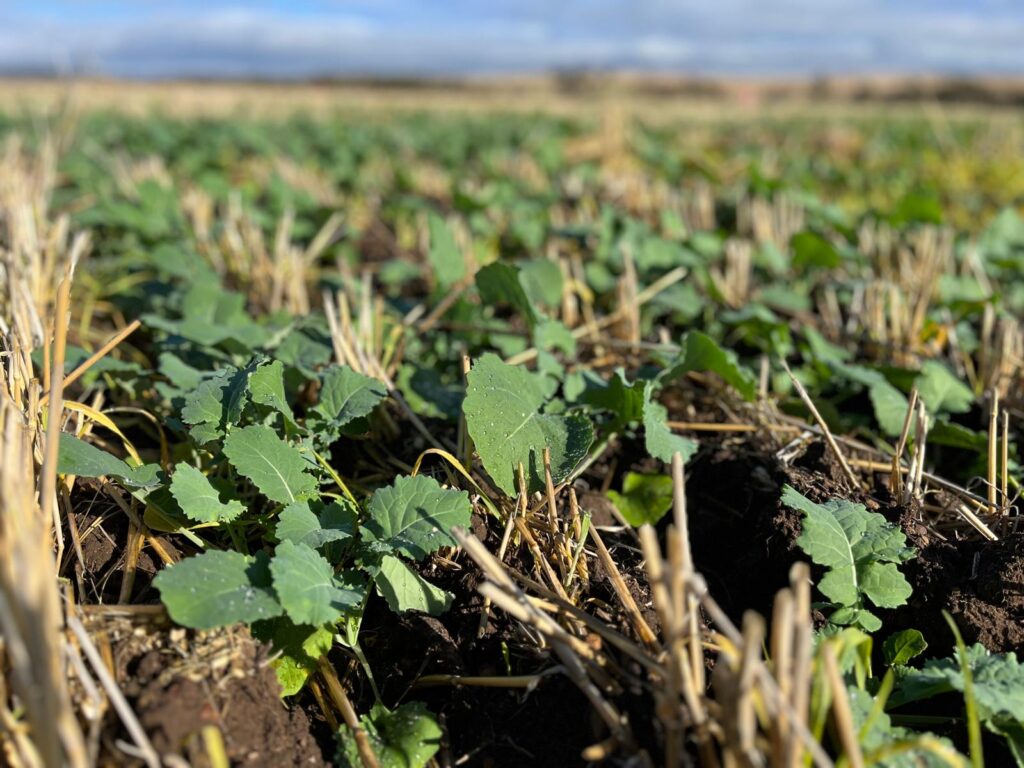
- Retaining stubble will enhance moisture retention.
Water repellent soils
- Sands are typically more prone to water repellence than loams or clays.
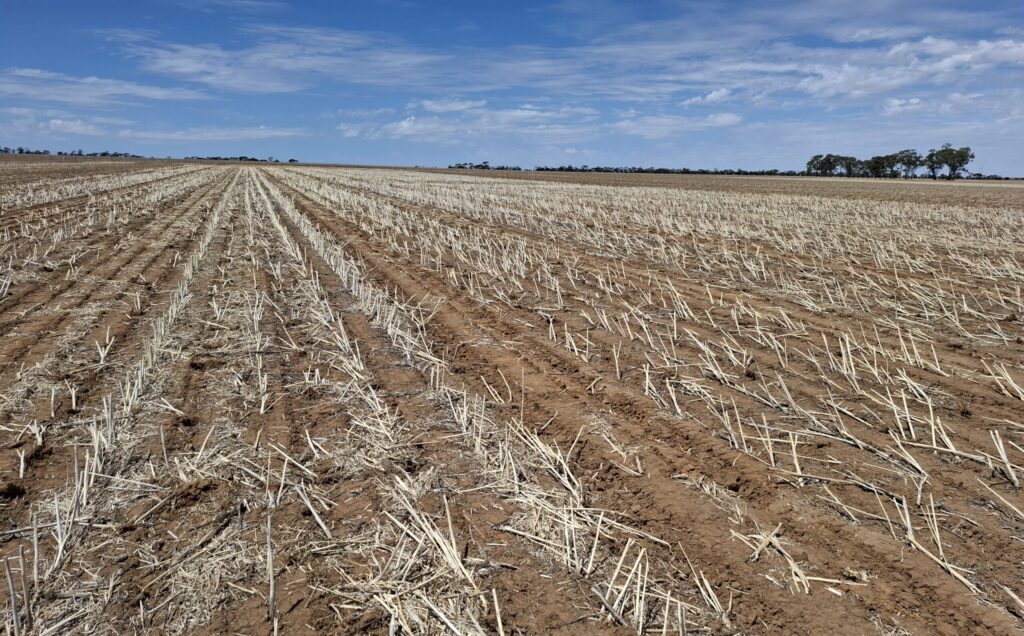
- Sowing on the previous stubble row, or on the edge of the stubble row (shoulder), can help promote access to:
- Infiltration pathways with water shedding from inter-rows towards stubble,
- Old root channels,
- Residual fertiliser, and
- Areas of increased microbial activity, which can promote nutrient availability and breakdown of water repellent wax coatings that form on soil particle surfaces.
- On-row sowing is often more suitable when stubble is short, brittle and not too dense.
- Edge-row sowing can achieve a similar result to on-row sowing without the problems caused by stubble with trash flow.
Following strategic tillage – ripping, spading, discing etc.
- Ensure sufficient rolling / packing of the soil surface following the tillage activity to create a suitable seed bed.
- Consider resetting the tramlines with equipment to form firm tramlines prior to seeding.
- Ideally, set up controlled traffic run-lines for machinery to minimise re-compaction.
- Potentially sow shallower to allow for furrow infill from the softer soil.
- Reduce seeding operating speed to minimise soil throw into the furrow.
- Sow when soil is moist for better structural stability of furrows.
- Consider press-wheel pressures while seeding these softer areas as pressures may need to be reduced.
- Where strategic tillage activities create a bare soil surface, consider the importance of sowing a crop or cover crop as soon as possible to minimise the risk of soil erosion.
Key points
- Preparation – work to your soil type and consider the soil constraints you’re dealing with. Pre-season soil sampling can assist with this.
- During seeding – where is the soil moisture level in the profile in different areas of the paddock, and how is it trending? What crop types are better suited to the conditions present?
- Review post seeding to look at how the crop establishment is going – when do the crops emerge? Where are areas of the paddock inconsistent? Are these associated with changes in soil types? Consider options available to identify and address any constraints.
References and resources
Crop establishment and precision planting (Glenn McDonald & Jack Desbiolles, 2023): GRDC Report
Effective furrow sowing for water repellent soils (DPIRD, 2024): DPIRD Factsheet
Sandy soils of the southern region (Masood Azeem et al. 2024): GRDC Report
Guidance systems a plus for on and edge-row sowing (Alisa Bryce & Wayne Pluske, 2022): GRDC Article
Fertiliser toxicity (Robert Norton & Jack Desbiolles, 2011): GRDC Factsheet
Reducing risks to canola establishment: GRDC resources
For more information, contact Bridget: Bridget.Watkins@murdoch.edu.au
This information is provided for general guidance purposes and is recommended to be discussed with your advisor, particularly to consider the specifics relevant to the soil types in your local area.
The Regional Soil Coordinators are supported by the Australian Government Department of Agriculture, Fisheries and Forestry through funding from the Climate-Smart Agriculture Program under the Natural Heritage Trust. The SW WA Regional Soil Coordinator is also supported by the South-West WA Drought Resilience Adoption and Innovation Hub, SoilsWest and Murdoch University.
MORE STORIES

Soil ecologist’s step into national soil innovation
Dr Ramesha H Jayaramaiah’s new project role will give him more opportunities to connect lab knowledge with practical agricultural systems.

Research spotlights soil fauna’s role in nutrient cycling
A review led by Dr Ramesha Jayaramaiah provides new insights into how soil fauna may help regulate nitrogen cycling and support more sustainable agricultural systems.

EasyDiesel tool calculates deep ripping decisions
The Department of Primary Industries and Regional Development (DPIRD) has released a tool for farmers to calculate the ongoing viability of their ripping program using current fuel prices.

Register now for the 2026 Soil Science Australia National Conference
Western Australia is hosting the conference on Whadjuk Noongar Boodja in Boorloo (Perth) from November 1-5, 2026.