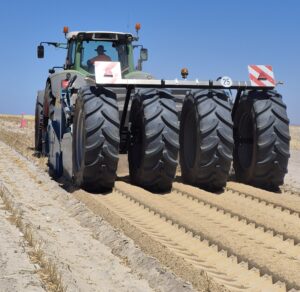
Grain growers undertaking deep tillage to overcome soil constraints will need to re-evaluate their herbicide strategy to capture potential yield benefits.
Research by the Department of Primary Industries and Regional Development (DPIRD), with co-investment by the Grains Research and Development Corporation, has led to improved knowledge to help growers select the best herbicide strategy following amelioration.
DPIRD research scientist Tom Edwards said trials had found increased herbicide toxicity following strategic deep tillage could reduce crop yields.
“Strategic deep tillage, such as soil inversion and deep soil mixing, is becoming more widely adopted and people are looking at what they need to do to get the best outcome,” Mr Edwards said.
“We are creating a radically different soil environment, with a reduction in surface organic matter and change of soil structure potentially altering how herbicides behave.
“This project evaluated the performance of a range of herbicides on sandplain soils to estimate their risk to crop production following strategic deep tillage.
“Results found pre-emergent herbicides can be more active on soils that have been inverted and as a result, significant yield reductions can occur when some commonly used pre-emergent herbicides are combined with shallow sowing, furrow infill, dry soil at sowing or intense rainfall shortly after sowing.”
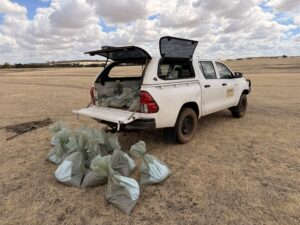
Thirteen field trials, from Geraldton to Esperance, and six intensive screenhouse experiments tested a range of commonly used pre-emergent herbicides over five years.
“The field trials replicated across the sandplain demonstrated soil inversion and deep mixing can lead to an increased risk of herbicide toxicity, but the frequency and severity of production loss was very dependent on the soil and environmental conditions,” Mr Edwards said.
“Further analysis in glasshouse and laboratory experiments confirmed strategic tillage can reduce the soil’s capacity to absorb some herbicides, increasing their potency.”
Mr Edwards suggested identifying the weed species and densities and use this to estimate the likely weed pressure after deep tillage.
“Undertake tillage when there is good soil moisture, improving the depth of weed burial and reducing the risk of erosion and furrow infill,” he said.
“Select an appropriate pre-emergent herbicide with good crop safety that is not sensitive to changes in organic matter or the amount of crop residue on the surface, and not reliant on separation from the crop.
“Establish a vigorous cereal crop as soon as possible to mitigate erosion risk and maximise crop competitiveness.
“Afterwards, assess weed densities and whether the dominant weeds have changed to best design future herbicide and integrated weed management strategies.”
More information is featured in the latest Grains Convo podcast episode – ‘Impact of deep tillage on herbicide toxicity’ which can be downloaded on Apple Podcasts and Spotify . For more information visit the Grains Convo website.