TRANSIENT salinity will become an even bigger issue as Western Australia’s agricultural soils experience reduced and more variable seasonal rainfall.
Department of Primary Industries and Regional Development (DPIRD) Senior Principal Research Scientist Dr Ed Barrett-Lennard is worried that this isn’t being talked about enough.
Around six million hectares of the eastern Wheatbelt experience some level of salinity, which can have negative effects on soil structure and plant growth. Sodic and alkaline soils used for cropping are prone to dispersion and poor soil structure, which makes them particularly vulnerable.
WA contends with dryland salinity, too – that is, salt presence associated with the development of a shallow water table due to the replacement of native vegetation by crops and pastures.
“The difference between dryland salinity and transient salinity is that dryland salinity is nearly binary – it’s off or it’s on,” Dr Barrett-Lennard said. “When it’s on, the land becomes desertified and isn’t capable of growing crops.
“Many of our croppers feel that it’s terminal and they just stop using it.”
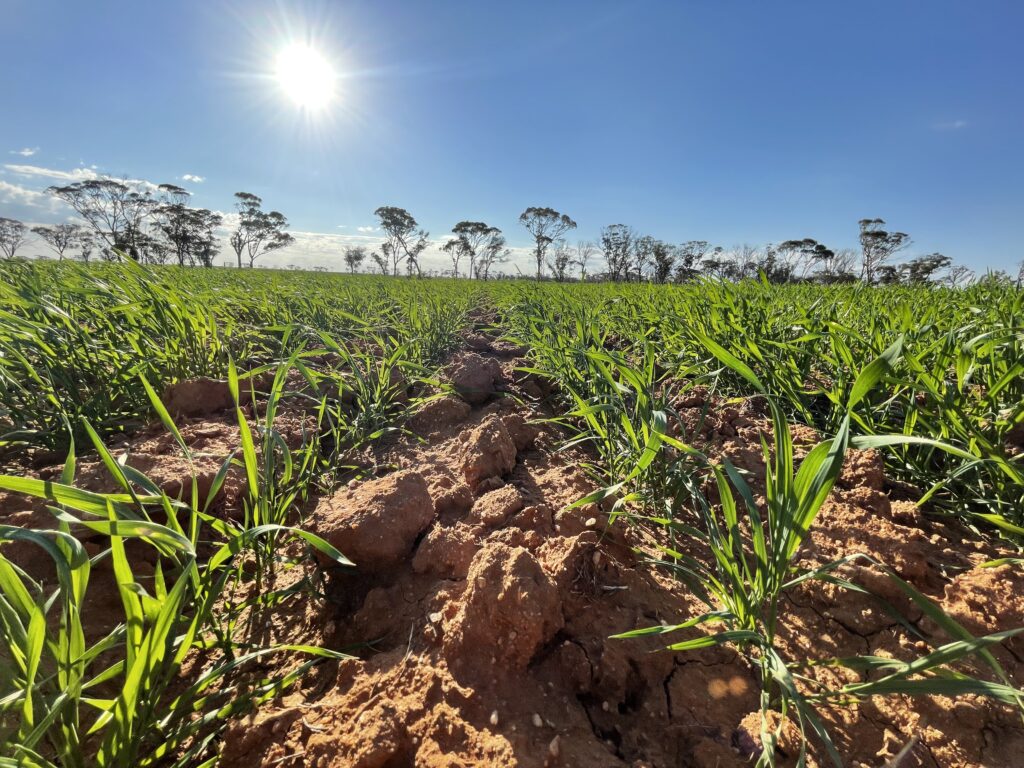
Unlike dryland salinity, transient salinity is caused by dispersed clay that reduces water drainage and prevents salts from leaching through a soil profile. The salts therefore accumulate to levels that limit crop growth.
Though rainfall in wet years can dilute salt concentration, giving crops better access to water and therefore an opportunity for greater yields, it’s quite the opposite in dry years when salts can be drawn into the upper layers of the soil profile.
“What I say to a lot of people is that it’s not the salt concentration in the soil that affects plant growth, but the salt concentration in the soil solution,” Dr Barrett-Lennard said.
“You can double the stress on the plants by doubling the salt concentration in the soil, but you can also double the stress on the plants by halving the water concentration of the soil.
“As these soils in the eastern Wheatbelt get drier, due to periods of lower rainfall, salinity will have more adverse effects on crop growth. It’s a thing we need to be aware of.”
Dispersed clayey soil is often the result of excess exchangeable sodium in the soil chemistry, where sodium replaces calcium and magnesium and keeps soil particles from binding together. This results in poorer structure and reduces hydraulic conductivity – the ability to move water. These soils can’t effectively leach salt either.
Gypsum is still used to treat the constraint, but results show it’s far from a silver bullet.
“When I joined the Department of Agriculture in 1982, there was a guy called Trevor Stoneman who was a sodic soil specialist,” Dr Barrett-Lennard said.
“If you read his published accounts, he found that soil sodicity could be ameliorated with gypsum successfully in about one in three trials, and that’s still roughly what it is today.
“We get a gypsum response in sodic soils about a third of the time. You can’t really go to farmers with that.”
While DPIRD is working on a better diagnostic to reliably identify gypsum-responsive soils, Dr Barrett-Lennard said active research was leaning towards gravel mulching sodic soils in low-rainfall environments that had demonstrated poor gypsum response.
He and fellow DPIRD researchers delivered the paper ‘Gravel mulch improves cereal yield and water use efficiency on alkaline sodic soils in the eastern wheatbelt of WA’ at the Grains Research and Development Corporation (GRDC) Update in Perth in February. This reported crop responses from a series of field research experiments undertaken with support from GRDC as part of the Soil Water and Nutrition Strategic Collaboration.
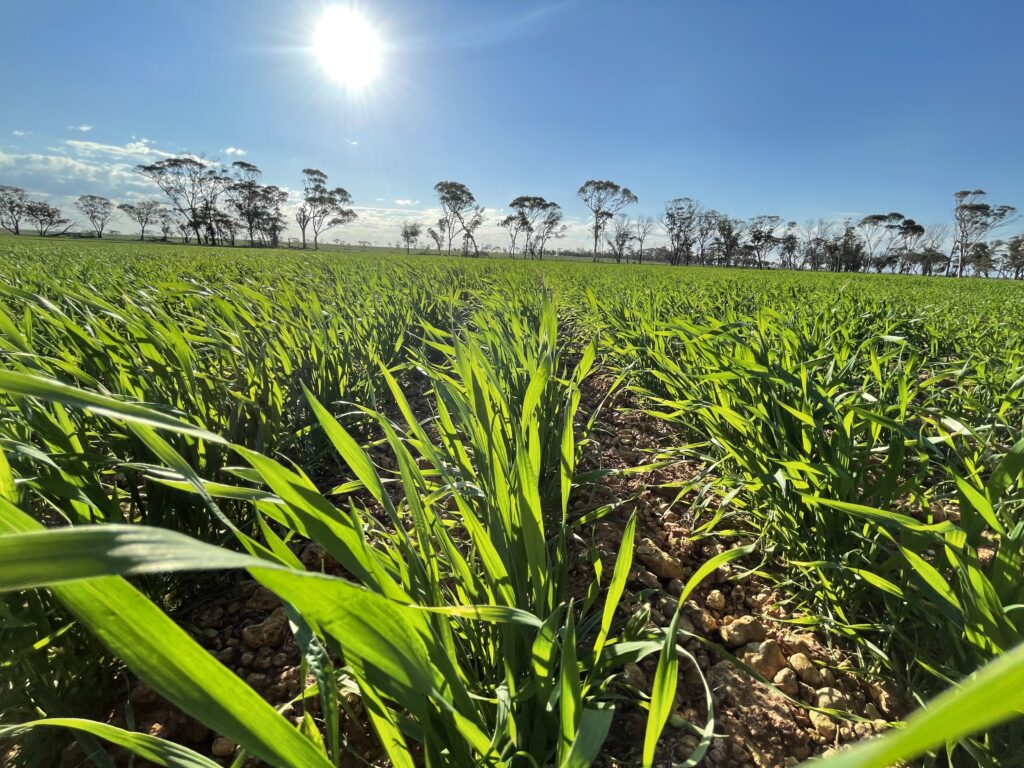
Their findings across four growing seasons indicated a strong correlation between gravel mulch and improved soil moisture retention in surface and subsoil layers.
However, the economics of application are strongly dependent on farmers having access to a viable source of gravel and a sufficient long-term improvement in productivity and profitability.
“Gravel mulches help retain moisture, which then dilutes the salinity of the soil solution,” Dr Barrett-Lennard said.
“We’re still unpacking the optimal application for gravel mulches. I think it means using big stones without fines, though gravel can be stones with fine stuff mixed in. But if you’ve got fine stuff mixed in, you can still have capillary rise of water up to the soil surface where it is lost to evaporation.
“A stone (1 cm plus in diameter) will only work as a mulch if there’s nothing around it, and it shades the surface of the soil and decreases evaporation.
“That aside, we think we’re getting an answer to sodic soils and why they aren’t gypsum responsive. For the very first time, I think we might be cracking it.”