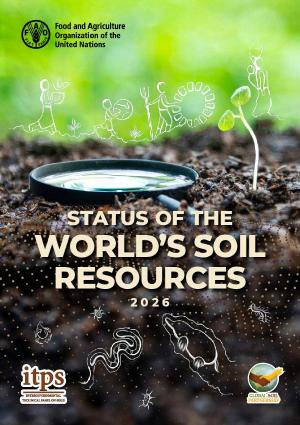
THE CONTRIBUTION of Murdoch University researchers to global soil management has been recognised in a decadal publication released by the Food and Agriculture Organization (FAO) of the United Nations (UN) and the Intergovernmental Technical Panel on Soils (ITPS).
Status of the World’s Soil Resources 2026 (SWSR) was launched in Mongolia late last month by The University of Western Australia’s Professor Brajesh Singh in his ITPS Chairman capacity.
The publication explores links between soils and the UN’s Sustainable Development Goals, the drivers of threats to global soil function, and facilitating adoption of sustainable soil management. It also provides seven regional soil assessments.
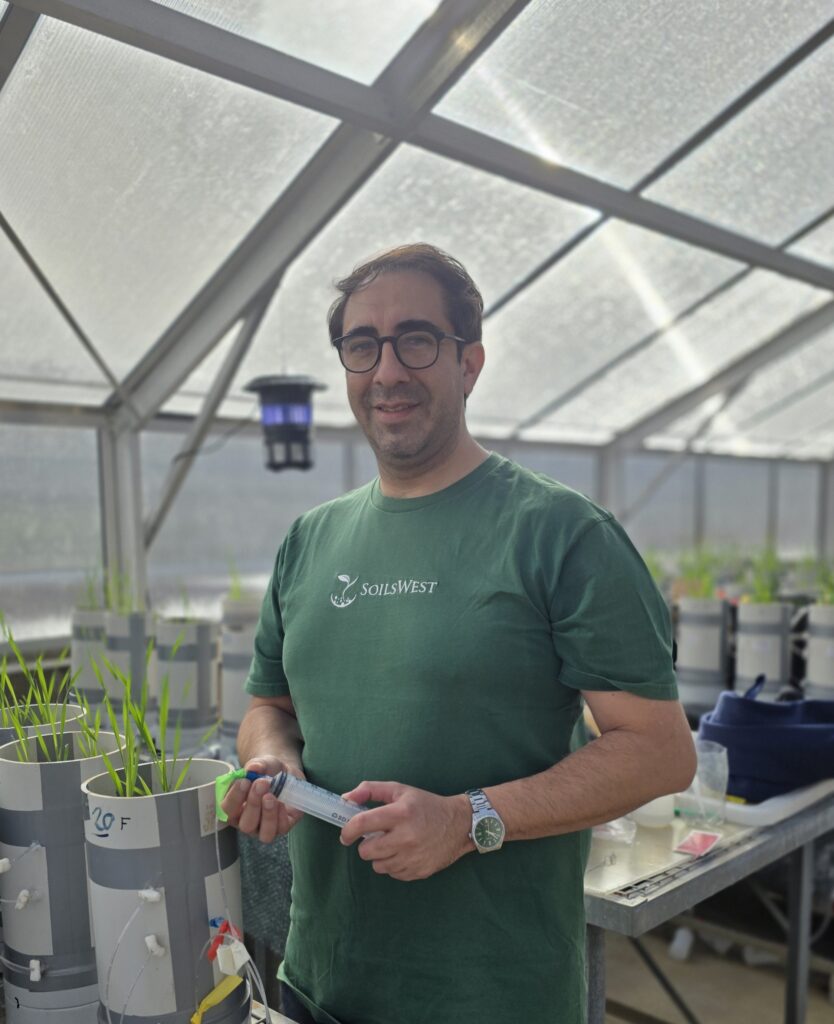
Emeritus Professor Richard Bell, SoilsWest Director and Associate Professor Fran Hoyle, and Professorial Fellow Ed Barrett-Lennard (Senior Principal Research Scientist – Department of Primary Industries and Regional Development) are acknowledged among contributing authors to ‘Chapter 13: Regional assessment for the Southwest Pacific region’.
Professor Bell said SWSR was not only an important document for soil scientists, but for anyone working in natural resource management and sustainable development – wherever that may be in the world.
“SoilsWest is mostly WA focused, but here we are contributing on the world stage as well,” he said.
“A number of the UN’s Sustainable Development Goals relate closely to the work we already do in nutrient management, soil pollution and education.
“Potassium, as an example, is underapplied in Western Australia and running down in many parts of the world. The bioplastics work at Murdoch is a significant contributor to finding alternatives that can break down in soil unlike petrochemical-based plastics.
“The need for people to better understand soil resources in order to practise more sustainable soil management has a nice connection to the new GRDC project that Fran and her team were recently awarded.”
Among his other appraisals of the publication, Professor Bell emphasised soil erosion as a significant threat to soil function.
Australia is responsible for a large proportion of global dust – such has been the impact of wind erosion, particularly in the arid zone and rangelands.
“Erosion remains a really big issue for soil management worldwide and contributes to carbon loss, other major nutrient losses and productivity losses,” Professor Bell said.
“Australia’s strong and fairly comprehensive adoption of no-till has made some real ground in reducing erosion risks in agricultural zones.”
Status of the World’s Soil Resources 2026 and its individual chapters are available for free download from the FAO website.
The FAO and ITPS first published The Report on the Status of the World Soil Resources in 2015.