AGGREGATE: NEWS & EVENTS
Mallee visit to share sandy soil research findings
MURDOCH University‘s Emeritus Professor Richard Bell will take a national lens to sandy soil amendments when he presents to a South Australian audience this week.
Professor Bell will be a guest speaker at Mallee Sustainable Farming‘s ‘Making Soil Amelioration Pay in the Mallee’ workshop at Loxton Research Centre on June 26.
He will be joined by Dr Amanda Schapel, Principal Officer for Soil Action with Primary Industries and Regions South Australia, and a panel of experienced local growers.
Professor Bell said he would expand on the nutrition, water and root depth information he outlined at the GRDC Grains Research Update in Perth in February.
This will include further interpretation of data collected by Dr Craig Scanlan, formerly of the Department of Primary Industries and Regional Development and now with The University of Western Australia.
“Craig’s data shows how as rooting depth increases, the potential water stored in the root zone increases,” Professor Bell said.
The true impact of soil organic matter on water storage – through recent meta-analysis conducted by The University of Sydney – will be another talking point of Professor Bell’s session.
“If you’ve built an extra 1% organic matter in the topsoil, you can hold an extra 1 mm of water, so next to nothing,” he said.
“So even if you increased root depth by 20 cm, you’ve accessed probably 5 mm of extra water. It’s just important to try to keep these things in proportion.
“It’s a motherhood statement that organic matter is great for the soil. It holds water, it holds nutrients, and we keep repeating that, but we often don’t do the back-of-envelope calculations to work out how significant it might be in a particular context.”
MORE STORIES

GRDC calls for research fellows
The Grains Research and Development Corporation is inviting applications for its early- and mid-career research fellowships for 2027.

Hands-on experiences open to Ag Science students
SoilsWest is offering project placements to current Murdoch University students who are considering Honours or Master’s studies for 2027.
Residues of previous findings in new research
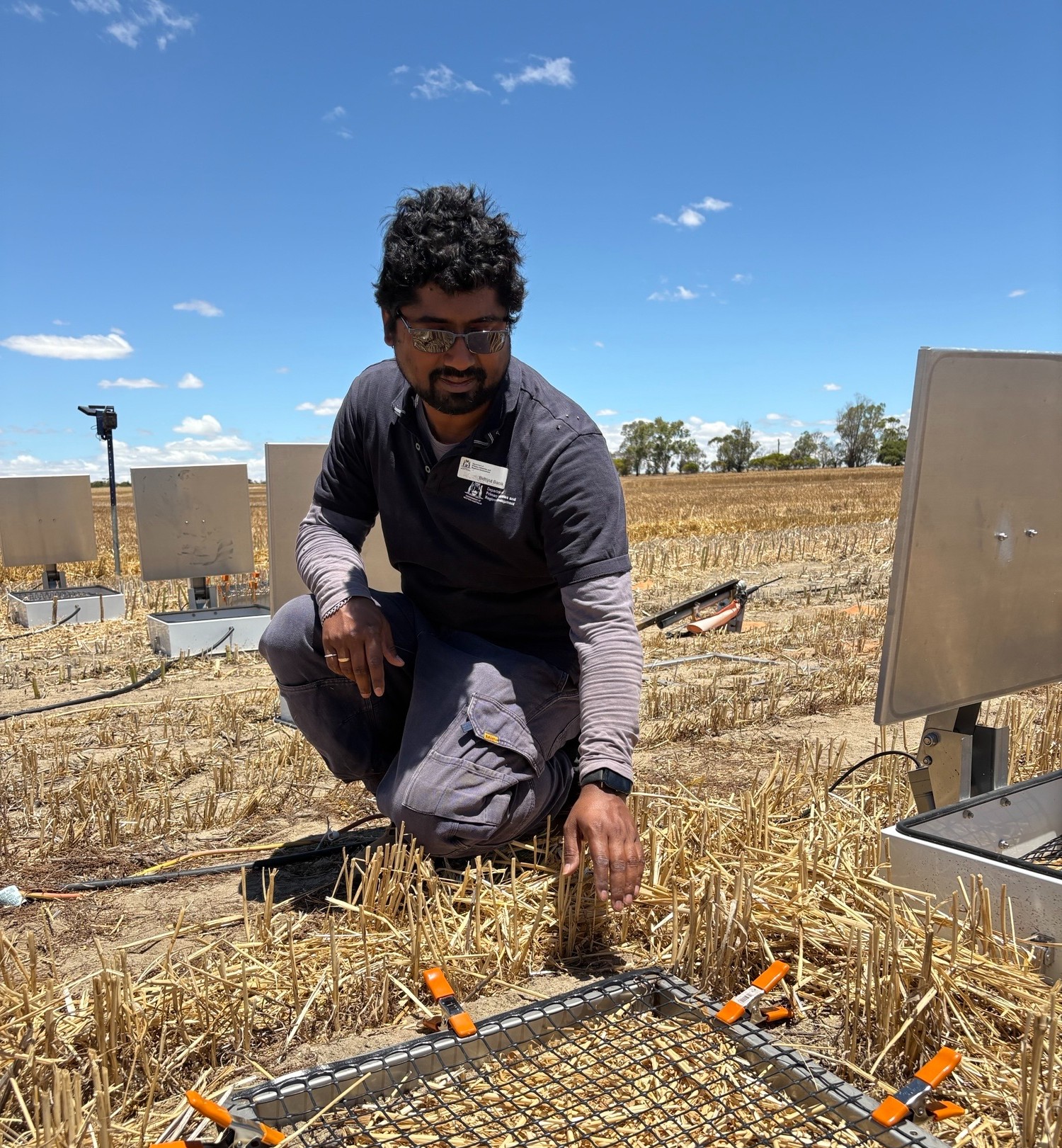
Preliminary findings of a replicated experiment led by DPIRD Research Scientist Dr Bidhyut Banik have parallels with nitrous oxide research conducted by UWA Associate Professor Louise Barton over the last 15 years.
The transient problem that won’t go away
DPIRD Senior Principal Research Scientist Dr Ed Barrett-Lennard is worried that salinity, which affects around six million hectares of the eastern Wheatbelt, isn’t being talked about enough.