
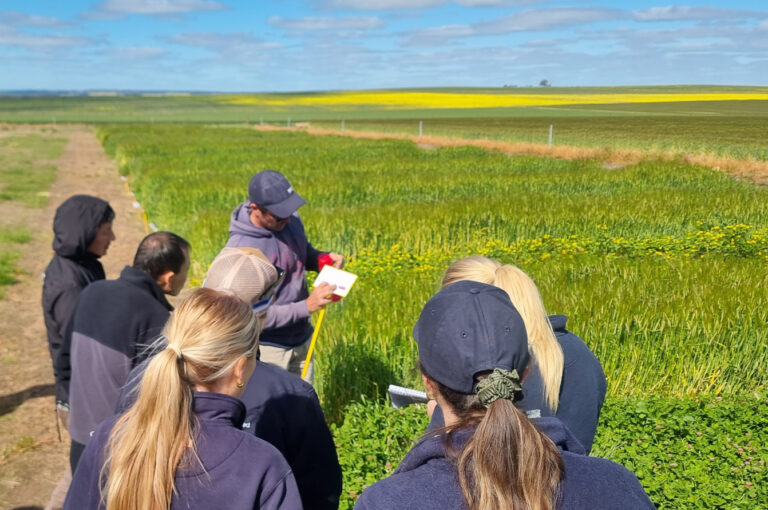
MURDOCH University‘s Dr Luca De Prato is hoping more Western Australian farmers will rotate their cereal and oilseed crops with legumes for the nitrogen fixation benefits.
Dr De Prato is a member of the Harvestable Annual Legume Options (HALO) team, whose project is a co-investment between the Grains Research and Development Corporation (GRDC) and the WA Agricultural Research Collaboration (WAARC).
Dr De Prato’s role involves research and economic modelling – exploring how the introduction of legumes in farming system rotations can benefit farmers by reducing synthetic fertiliser use and prioritising soil health.
“Legumes fix nitrogen, however we’re trying to see what economic benefit it brings with the reduction of synthetic fertiliser,” he said.
“While we’re improving soil health through a plant-based solution and making sure there’s a lot of biological nitrogen fixed, we need to understand how much nitrogen there is, when it gets released, how it gets released and what the economic benefit is versus a conventional farming rotation.”
Nitrogen fixation is the process by which atmospheric nitrogen is converted into ammonia or ammonium, essential compounds for plant growth. Through their relationship with rhizobia, legume crops form root nodules in which this complex conversion takes place.
By increasing the hectarage of legumes in their rotation, farmers can count on residual nitrogen, lessening the amount of fertiliser required to then sow cereal or oilseed crops.
Dr De Prato said the effectiveness of nitrogen fertiliser was hard to measure anyway.
“A considerable amount of the nitrogen farmers apply as urea or urea ammonium nitrate gets leached or lost to the environment. We don’t know much of the synthetic nitrogen that’s applied actually gets utilised by the plants,” he said.
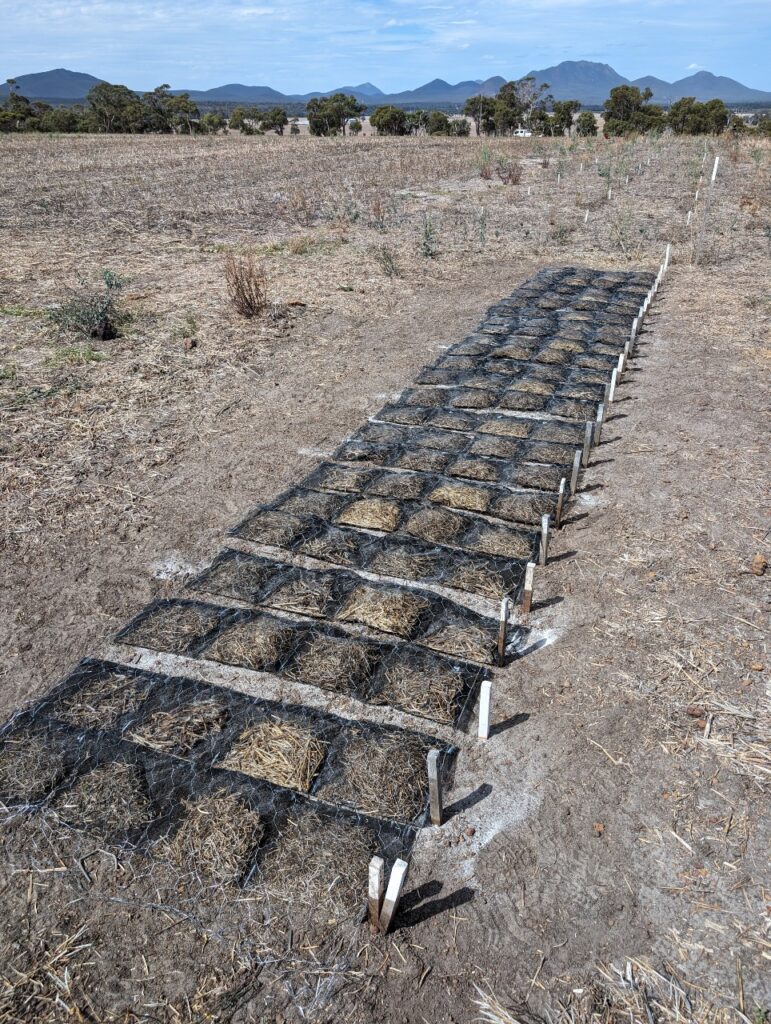
The research is in its third year at a trial site at Konnongorring, around 180 km north-east of Perth. It’s one of 17 trial sites managed by the HALO project.
In 2023, the Konnongorring plots were sown to bladder clover, Trigonella, French serradella, sub clover, woolly pod vetch, narrow leaf lupin and barley as control. In 2024, when the whole trial was sown to wheat, half the plots had extra nitrogen applied to assess the carryover nitrogen from each legume phase.
This year, plots were sown to create a variety of rotation options. They included barley, woolly pod vetch, lupin, chickpea, peas, lentils and various regen legumes, from hardseeded varieties.
Dr De Prato said hardseeded varieties gave more options to farmers, especially when understanding their breakdown patterns.
“Those varieties produce more biomass than conventional legumes, such as sub clover, and are very efficient at fixing nitrogen,” he said.
“Farmers can harvest seed if they want to or they can brown manure them. They can choose whether to let them seed too. When the seed sets, they’ve got a seedbank in the soil, which means the crop is going to come back and fix nitrogen.
“We want to work on creating more nitrogen and storing it in the soil for subsequent crops.”
This research is being undertaken with investment from GRDC and WAARC: Summer Sown Aerial Seeded Pasture Legume Development for Western Australia, UMU2303-005RTX. WAARC brings together the research strengths of the CSIRO, Department of Primary Industries and Regional Development (DPIRD), Grower Group Alliance (GGA), Curtin University, Murdoch University and The University of Western Australia to build additional research capacity and respond to new challenges within primary industries.
Image: Trials at Konnongorring and Kendenup investigated legume crop litter decomposition and nitrogen release timing.
Beyond lime: getting micronutrients right as soil pH changes
Murdoch University’s Dr Tona Sanchez-Palacios says farmers could find themselves navigating micronutrient deficiency in response to otherwise successful liming programs.
Practical podcasts for managing soil constraints
Explore our curated podcast playlists featuring leading researchers, advisers and farmers. With a focus on Western Australian soils and agricultural systems, alongside relevant insights from interstate experts.
SoilsWest reaches 10 years of industry impact
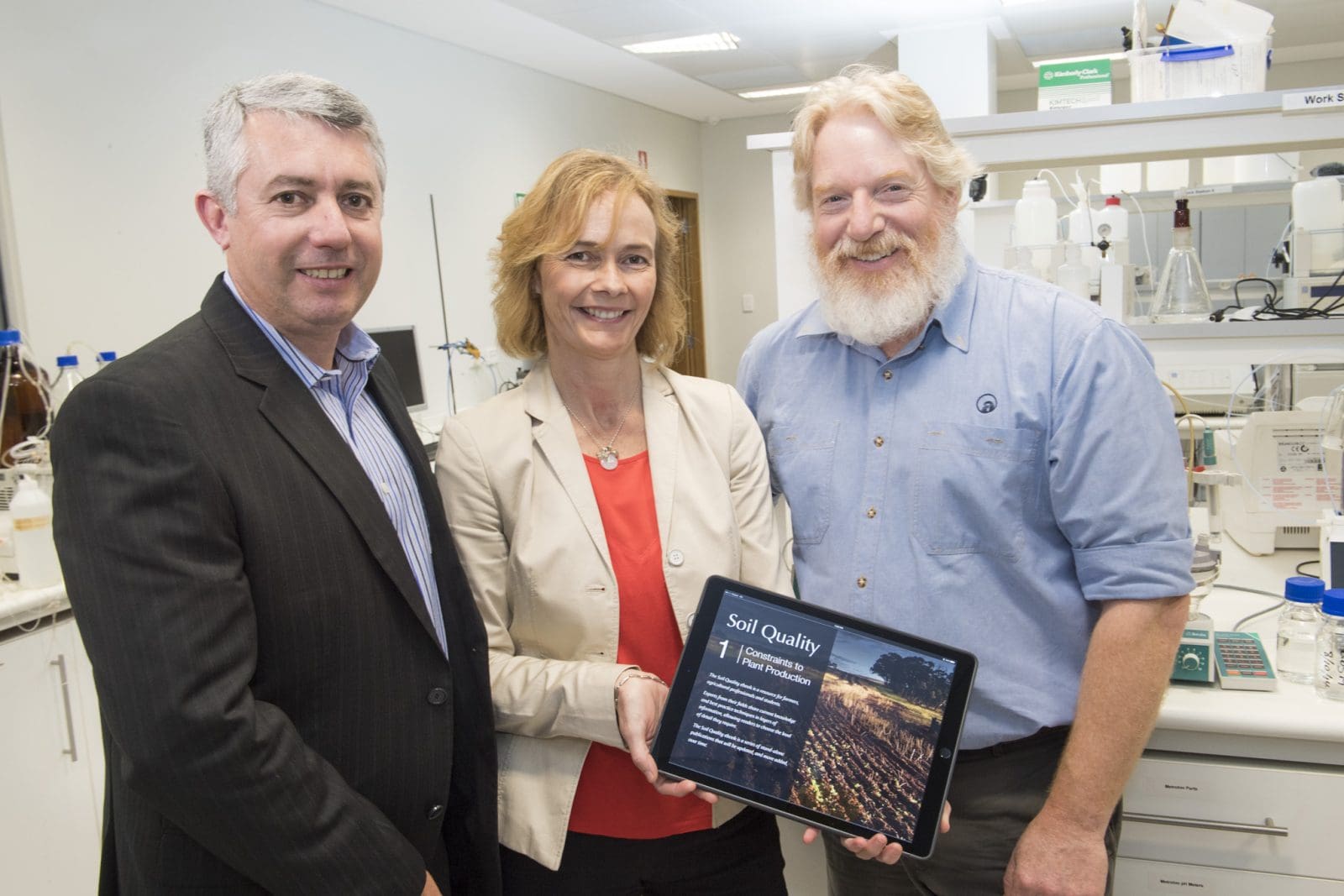
SoilsWest continues to represent a core partnership between MU and DPIRD, and a reach that extends to soil scientists and researchers at UWA, Curtin University and CSIRO.
A quick dig with … Chris Gazey
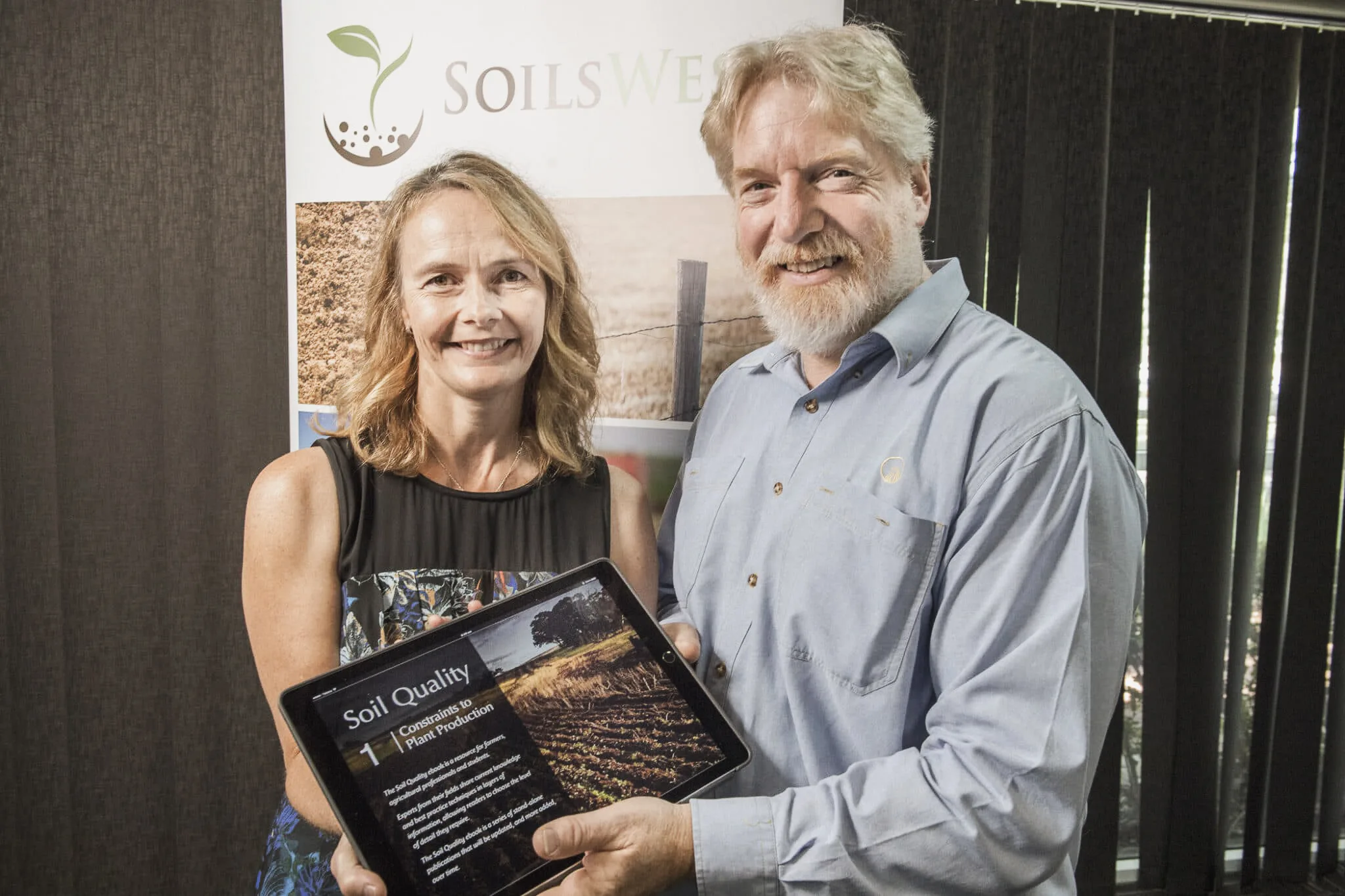
Chris Gazey, Department of Primary Industries and Regional Development (DPIRD) Principal Research Scientist and SoilsWest Co-Director, recounts the formation of the SoilsWest alliance and its impact over 10 years. Happy birthday, SoilsWest.