AGGREGATE: NEWS & EVENTS
Legume research to improve sustainable cereal rotations
THE NITROGEN benefit from different legume species in cereal-based crop rotations has been quantified by Western Australian research to help boost yields, reduce fertiliser costs and industry emissions.
The Department of Primary Industries and Regional Development (DPIRD) profiled the study at the Grains Research and Development Corporation (GRDC) Research Updates in Perth on Tuesday.
The research quantified the timing and magnitude of nitrogen release from decomposing legume stubbles and determined the extent to which this nitrogen was recovered by subsequent cereal crops.
The four year rotational trial, undertaken with GRDC co-investment and support from the WA Agricultural Research Collaboration, CSIRO and Murdoch University, was established in 2023 on duplex soil at Konnongorring, south of Wongan Hills.
The work evaluated nitrogen supplies from residue mineralisation (decomposition) of clover, serradella, lupins, Trigonella and woolly pod vetch.
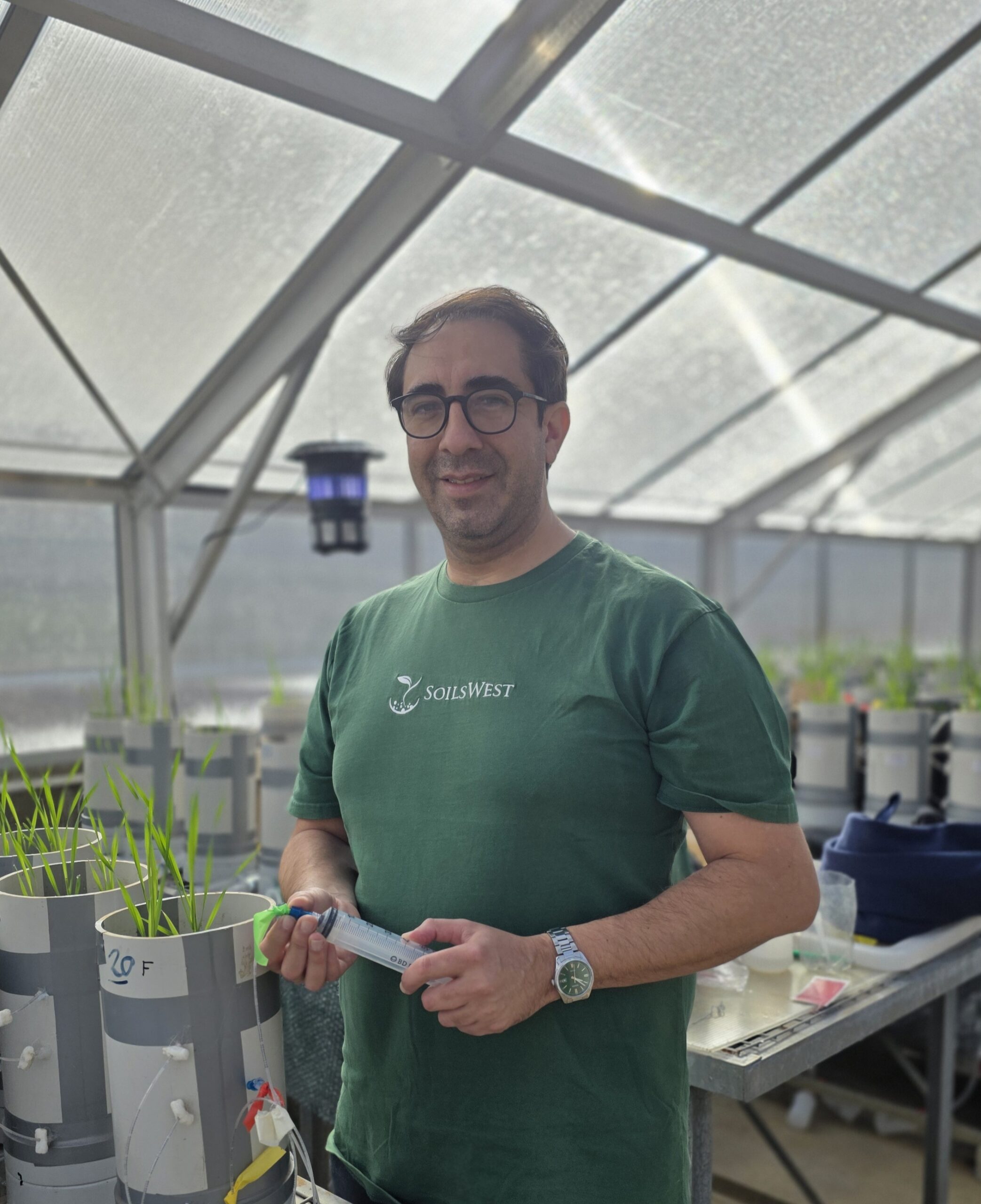
Photo:Â DPIRD research scientist Robert Harrison discussed research to quantify nitrogen supplies from decomposing legume stubbles and the benefit to subsequent cereal crops at the GRDC Crop Updates 2026.
MORE STORIES

Soil education roles open for national project
Murdoch University is inviting applications for two roles as part of the National Soils Education Opportunity (NSEO).

Mallee visit to share sandy soil research findings
Murdoch University’s Emeritus Professor Richard Bell will deliver nutrition, water and root depth information to researchers and growers at a South Australian event.

Expressions of interest open for soil testing programs
Western Australian farmers are encouraged to express their interest in soil testing programs provided by their state and federal governments.

Five key features of the Soil Quality Knowledge Base
The Soil Quality Knowledge Base is your comprehensive online platform with information, research and tools to understand and manage soil in agricultural systems.