AGGREGATE: FEATURE
A quick dig with … David Hall
SOIL CONSTRAINTS and amelioration, adoption, Esperance.
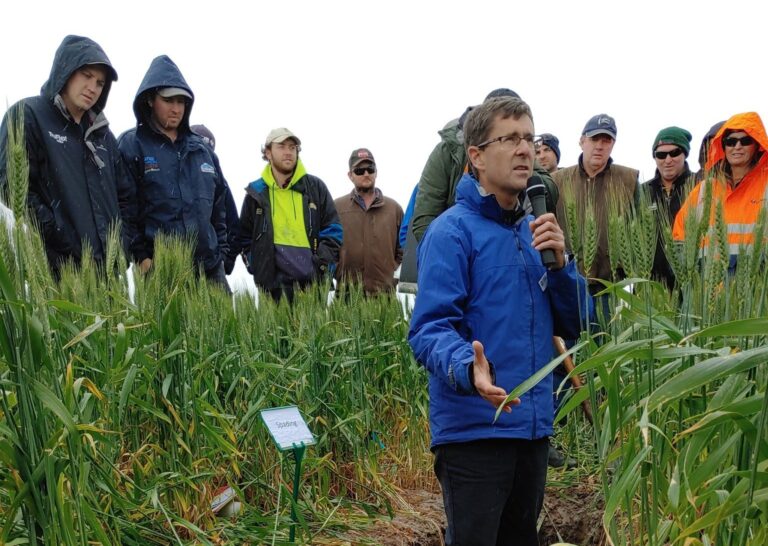
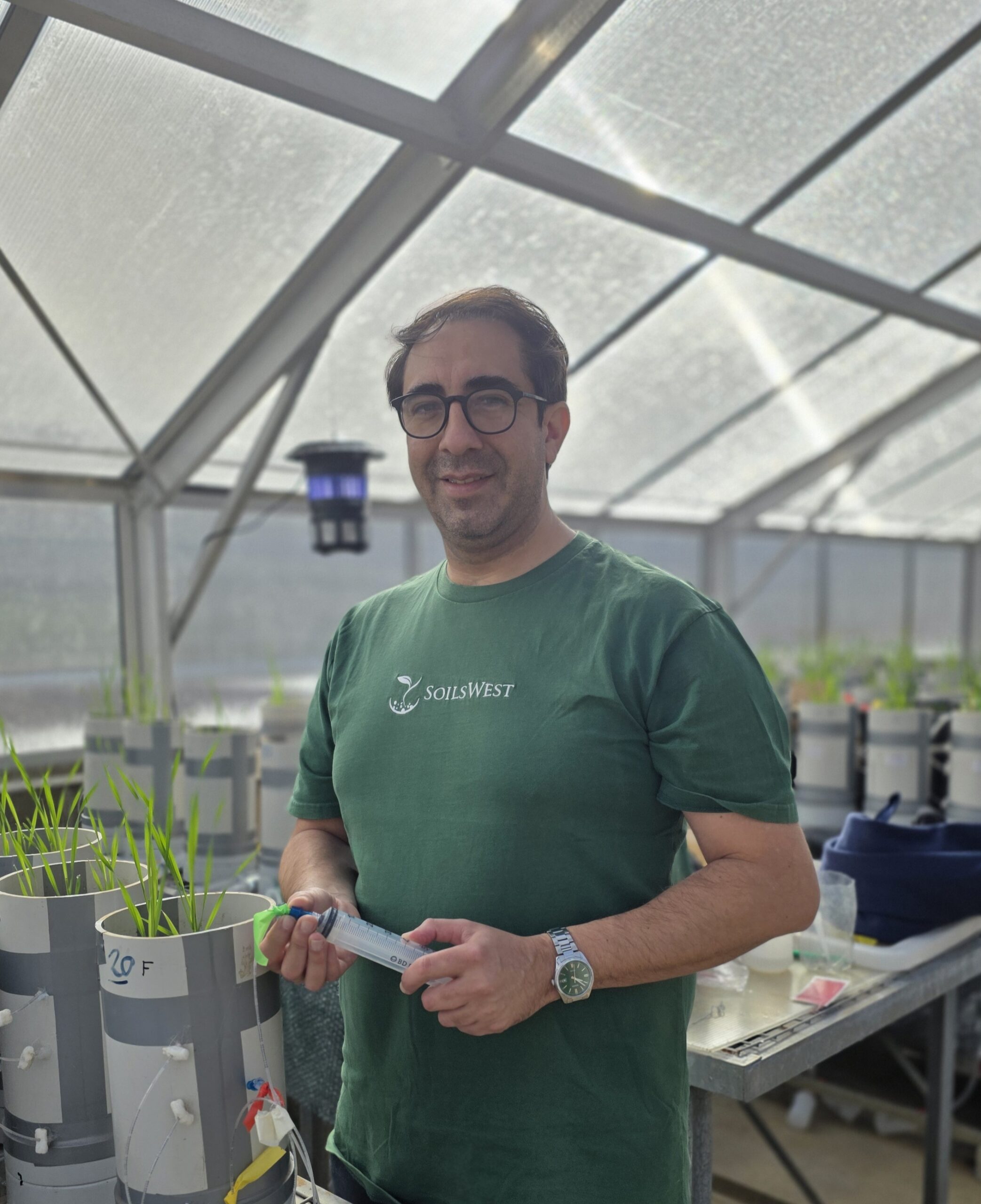
Retiring DPIRD Principal Research Scientist David Hall shares highlights and challenges of a four-decade career in soils, and why long-term trials are critical to the industry’s future.
We've got very old soils in Western Australia and for this reason most of them have multiple constraints.
We can either suggest what land use would be suitable for a soil with those constraints or investigate ways to ameliorate these constraints. For me, the challenge has been to identify what the constraints are, how they impact plant growth, and which ones, once eliminated, give the biggest jump in productivity and profitability. There’s a bit of detective work to it, but it is very rewarding when you can measure the step change in productivity and increased profitability.
Claying water-repellent sands gave me the opportunity to work on a field experiment on a farmer's property that lasted 15 years.
That’s pretty rare in agricultural research where short-term funding cycles make it harder to run long-term field experiments.
We were able to take those experiments through to the point where we were confident the claying on the south coast was going to have lasting benefits in terms of crop yields and profits despite taking four to six years to financially break even.
Those yield increases were maintained over the full period of time that the experiments were conducted. We showed improvements in soil organic carbon levels through increased production and protection of the carbon from microbial decomposition by the clay. We also showed improvement in nutrient retention (phosphorus) and nutrient availability (potassium and sulfur) as a result of clay application.
Ameliorating sodic clays has been one of the biggest challenges of my career.
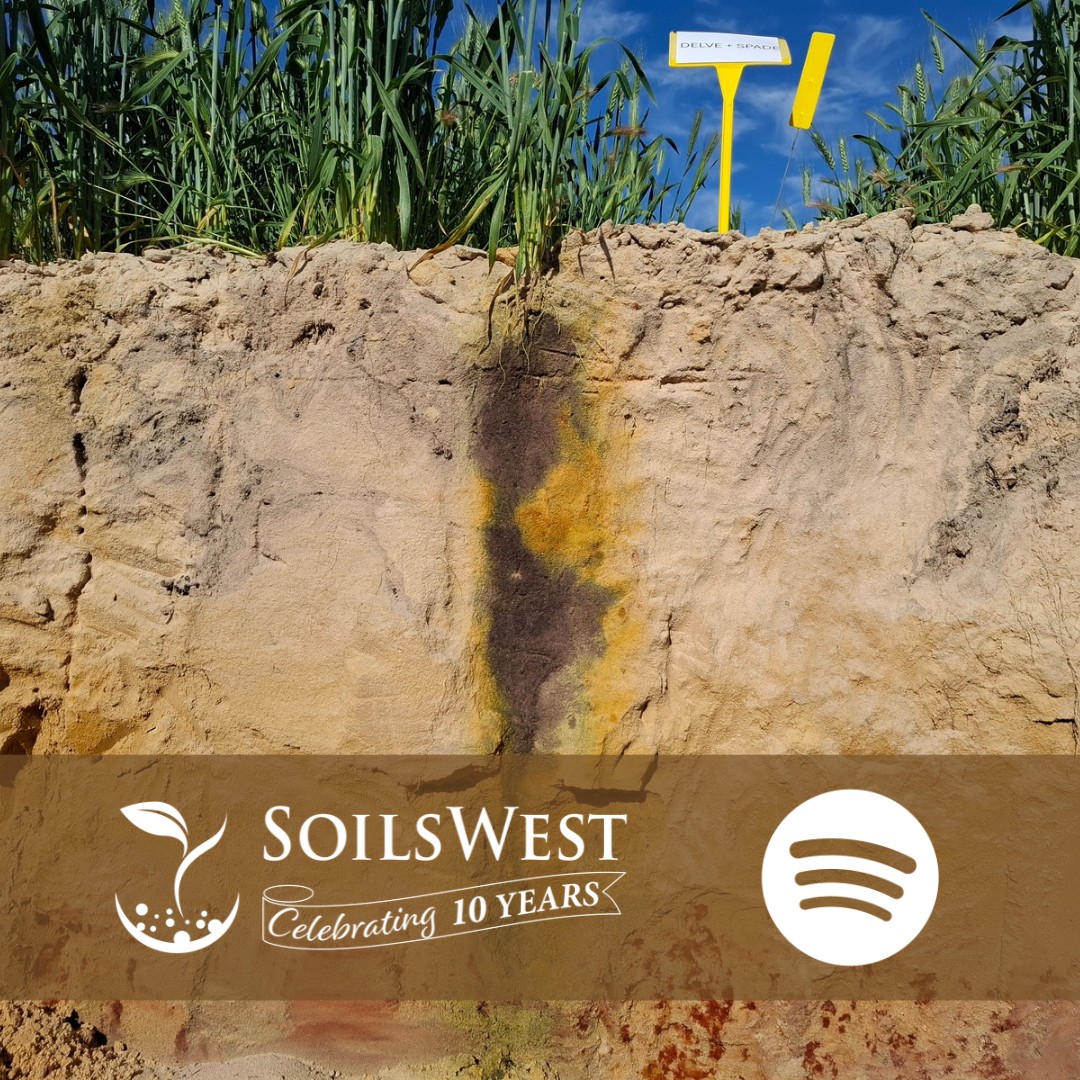
In many of our sodic clay soils, dispersion of the soil aggregates limits drainage and leaching of salts resulting in transient salinity and exacerbates boron toxicity. These limitations are generally deep in the subsoil.
In low rainfall heavy clay soils, where profit margins are very tight, we are really limited by what farmers can spend to achieve any improvements in crop yields. Hence ameliorating sodic clays has been the most challenging but, in some respects, very rewarding too.
Since the 1980s deep ripping and gypsum have been the ‘go to’ treatments for managing sodic clays. However recent work has cast doubt on the effectiveness of these treatments, particularly on sodic Calcarosols.
Some of the new and exciting work has focused on channelling rainfall from the interrow to the seeded row. Water harvesting research led by Ed Barrett-Lennard has shown a 0.5 tonne/ha yield increase across numerous experiments. Mineral surface mulches that reduce evaporation has also shown average grain yield increases of 0.6 tonne/ha in sodic clays.
Gypsum remains a tool to manage sodic soils but there is still a lot to be done in identifying gypsum responsive soils and the amounts required to rectify sodicity and soil dispersion in the longer term.
Deep subsoil constraints are critical to this work over the next five, 10 or 20 years.
We’re very good at managing topsoil, but the subsoil is our Achilles heel. How do we tap into the available water and nutrients that exist deep within the soil profile that can have a profound effect on overall productivity? How do we get amendments deeper into the profile profitably? We’re seeing that with Gaus Azam‘s re-engineering work where deep-placed lime in acidic profiles is likely to pay big dividends in the very near future.
We’ve still got a lot of work to do with transient salinity, boron and sodicity in clay soils, and it could be 10 to 15 years before we have profitable solutions. Having said that, with land prices increasing, I can see farmers prepared to invest in higher-cost ameliorative treatments, particularly if benefits have a long-lasting impact.
While successful soil amelioration is sexy, being able to document and progress science where ameliorative options are not found is also important.
My early research in Esperance concentrated on increasing landscape plant water use and reducing deep drainage (recharge) to manage dryland salinity. Our research looked at ways of incorporating trees, perennial pastures, long season annual crops and summer crop rotations.
Despite intensive work, the options we found either had little impact on salinity, were not profitable or could not be incorporated into annual cropping systems. A lot of this research was published and so there is a foundation that future scientists can use to explore further options.
I’ve been very lucky with peer and grower support in Esperance.
Between individual farmers, DPIRD, SEPWA, GRDC, universities and CSIRO, there has been no shortage of constructive ideas and supportive collaborations leading to industry adoption and good outcomes for soils, growers and the whole industry.
As a soil scientist who has been regionally based for all of my career, building national and international networks is really important, particularly if you are working on complex issues. Systems to encourage and facilitate regional researchers to develop these networks is work in progress.
Having said this, we are incredibly lucky in WA to have colleagues who are at the top of their profession.
Long-term research requires long-term funding, and I wish to acknowledge the ongoing support of GRDC and DPIRD. It has allowed us to understand soils, their constraints, and strategies for managing and eventually overcoming them.
MORE STORIES

Farm focus for second online nutrition course
Understanding Soil and Plant Nutrition steps through sample plans, soil and plant analyses, test reports, major nutrient cycles and on-farm trials.

Early bird rates end soon for SSA National Conference
Soil Science Australia members and non-members planning to attend November’s conference get a discount if they register by the end of July.

Dieback milestone conference to be held at Murdoch
The Dieback Information Group Conference 2026 will include presentations from Professor Treena Burgess, Dr Sarah Sapsford and Mr Bob Du, who represent Murdoch University’s Harry Butler Institute (HBI).

Steady, or carbon goes
Murdoch University’s Emeritus Professor Richard Bell and Wheatbelt Natural Resource Management’s Aimee Mouritz discussed soil carbon in a recent podcast.